top of page

Exoplanets

An exoplanet refers to any planet located outside our solar system. While most exoplanets orbit other stars, there are some known as rogue planets that float freely without being bound to any star. So far, over 5,600 exoplanets have been confirmed, out of the billions we believe are out there.

overview

Most of the exoplanets discovered so far are in a relatively small region of our galaxy, the Milky Way. ("Small" meaning within thousands of light-years of our solar system; one light-year equals 5.88 trillion miles, or 9.46 trillion kilometers.) Even the closest known exoplanet to Earth, Proxima Centauri b, is still about 4 light-years away. We know there are more planets than stars in the galaxy.

By measuring exoplanets’ sizes (diameters) and masses (weights), we can see compositions ranging from rocky (like Earth and Venus) to gas-rich (like Jupiter and Saturn). Some planets may be dominated by water or ice, while others are dominated by iron or carbon. We’ve identified lava worlds covered in molten seas, puffy planets the density of Styrofoam and dense cores of planets still orbiting their stars.
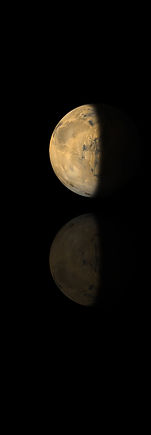
20141203212457!Comparing_the_size_of_Earth%2C_Mars%2C_and_exoplanets_of_Kepler-20_and_Kepler-42_08.jpg
20141203212457!Comparing_the_size_of_Earth%2C_Mars%2C_and_exoplanets_of_Kepler-20_and_Kepler-42_01.jpg
20141203212457!Comparing_the_size_of_Earth%2C_Mars%2C_and_exoplanets_of_Kepler-20_and_Kepler-42_09.jpg
20141203212457!Comparing_the_size_of_Earth%2C_Mars%2C_and_exoplanets_of_Kepler-20_and_Kepler-42_02.jpg
20141203212457!Comparing_the_size_of_Earth%2C_Mars%2C_and_exoplanets_of_Kepler-20_and_Kepler-42_10.jpg
20141203212457!Comparing_the_size_of_Earth%2C_Mars%2C_and_exoplanets_of_Kepler-20_and_Kepler-42_03.jpg
20141203212457!Comparing_the_size_of_Earth%2C_Mars%2C_and_exoplanets_of_Kepler-20_and_Kepler-42_04.jpg
20141203212457!Comparing_the_size_of_Ear
20141203212457!Comparing_the_size_of_Earth%2C_Mars%2C_and_exoplanets_of_Kepler-20_and_Kepler-42_12.jpg
20141203212457!Comparing_the_size_of_Earth%2C_Mars%2C_and_exoplanets_of_Kepler-20_and_Kepler-42_05.jpg
20141203212457!Comparing_the_size_of_Ear
20141203212457!Comparing_the_size_of_Earth%2C_Mars%2C_and_exoplanets_of_Kepler-20_and_Kepler-42_13.jpg
20141203212457!Comparing_the_size_of_Ear
20141203212457!Comparing_the_size_of_Earth%2C_Mars%2C_and_exoplanets_of_Kepler-20_and_Kepler-42_14.jpg
GSFC_20171208_Archive_e000132~large.jpg

How Do We Find Exoplanets?

Exoplanets are far, but scientists have discovered creative ways to spot these seemingly tiny objects.

PIA14724_ip.webp

Strange New Worlds

Explore an interactive gallery of some of the most intriguing and exotic exoplanets discovered so far.


I can help you
Readings

 Exoplanet Types

So far scientists have categorized exoplanets into the following types: Gas giant, Neptunian, super-Earth and terrestrial with subcategories like mini-Neptunes within those groups.

arrow-right.png
1795-1585-what-is-exoplanet-banner-jpg.png
Screenshot 2024-09-21 022923.png

DESTINATIONS

About
bottom of page